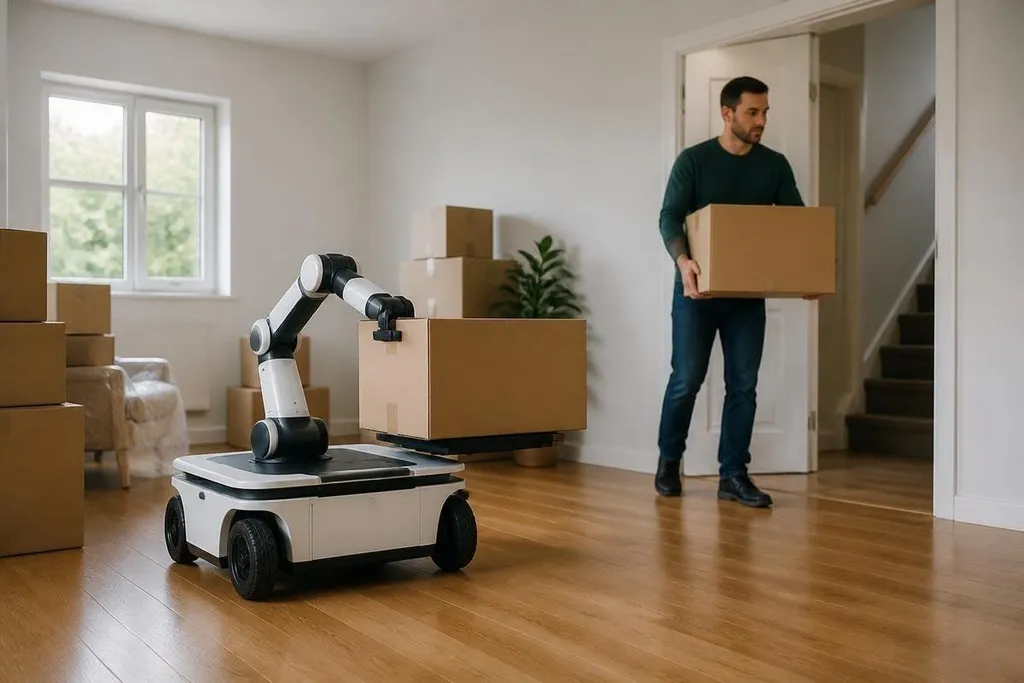
A robot could clean an empty room, carry boxes across a level floor, or move items between fixed points. It won't replace the person who sorts fragile glass, guides a sofa through a doorway, or handles stairs.
For someone planning a house move, the useful question is not whether robots can move everything. It is which parts of the job are repeatable enough for a machine to handle.
Quick read
- A robot vacuum can clean rooms after furniture leaves.
- A wheeled carrier can move packed boxes across smooth, level floors.
- Stairs, loose clutter, and fragile objects still need a person.
Where robots can help
The easiest jobs for robots have clear start points, clear destinations, and few objects in the way. That fits floor cleaning, repeated box runs, and movement between a loading area and a storage space.
A robot vacuum works after most furniture has left. Its job is narrow, but that narrow job matters: dust and small debris are less likely to reach the new home inside shoes or on clean furniture. It won't pick up cables, lift boxes, or decide which room an item belongs in.
A wheeled robot may carry boxes across a flat floor when its route stays open. The box still needs to fit on its platform, stay below the machine's load limit, and remain stable while the robot turns. Those details decide if the task works.
Robotic arms fit a different part of the move. An arm fixed to a workbench could sort objects into bins when each item arrives in a known position. It needs a gripper that suits the object, a camera or other sensor, and enough reach. A pile of mixed household goods gives it a much harder job than a row of identical containers.
Why the house itself causes trouble
Homes are poor robot workspaces. Floors change from wood to carpet, door thresholds interrupt wheels, and boxes appear in places that were clear ten minutes earlier.
Stairs create a harder problem because the robot must control its body while changing height. A wheeled carrier built for level floors cannot solve that task through software alone. It needs hardware designed for stairs, along with a way to stop safely if a wheel loses contact.
Fragile items add another limit. A robot can move an object without knowing that a thin glass panel will crack under a grip that feels safe for a plastic box. People bring useful judgment to that moment because they can see damage, weight, and risk together.
The same issue applies to furniture. A table may fit through a doorway on paper, yet its legs can catch on the frame during a turn. A person can change the angle as the object moves. A robot needs sensors, a planned route, and enough control to react without striking the wall.
What to check before buying or renting
A box crossing a room proves little if the robot needs a person to guide it. Home moving robot reports can name the machine, payload, route, and human help recorded during the test. Check those details against your stairs and heaviest box before you compare the robot’s full cost with hiring help.
Price also needs care. A machine may carry boxes, but the full cost can include delivery, setup, software, batteries, charging equipment, and a person to watch it. If the move lasts one day, that extra work may cost more than hiring help for the same task.
I'd use a robot for floor cleaning or repeated box movement only when the route is flat, clear, and easy to supervise.
The right test is a small one. Mark the route, use empty boxes first, and check every doorway before loading anything fragile. A machine that completes ten empty trips has shown useful movement, but it has not yet proved that it can protect a television or carry a box down steps.
A moving-day decision guide
Use this checklist before you commit money or time:
- Route: clear floor from pickup point to drop-off point
- Surface: no stairs, deep thresholds, or loose rugs on the planned path
- Load: box weight and size within the robot's stated limits
- Object risk: no glass, liquids, unstable stacks, or items with loose parts
- Supervision: a person available to stop the robot and clear new obstacles
- Fallback: a manual plan for every task the robot cannot finish
That last point matters because a move has a fixed deadline. If the robot stops near the doorway, someone still needs to finish the job without waiting for a repair or a fresh charge.
For most homes, robots can remove a few repeated trips and clean after the rooms empty. The boxes, stairs, and fragile items still belong in a plan built around people.